Recipes / Dessert
High-Protein Cottage Cheese Ice Cream (25g, No Churn)
By Md Z. Hasan · Updated August 7, 2026
5 min
Total time
2
Servings
25g
Protein
240
Calories
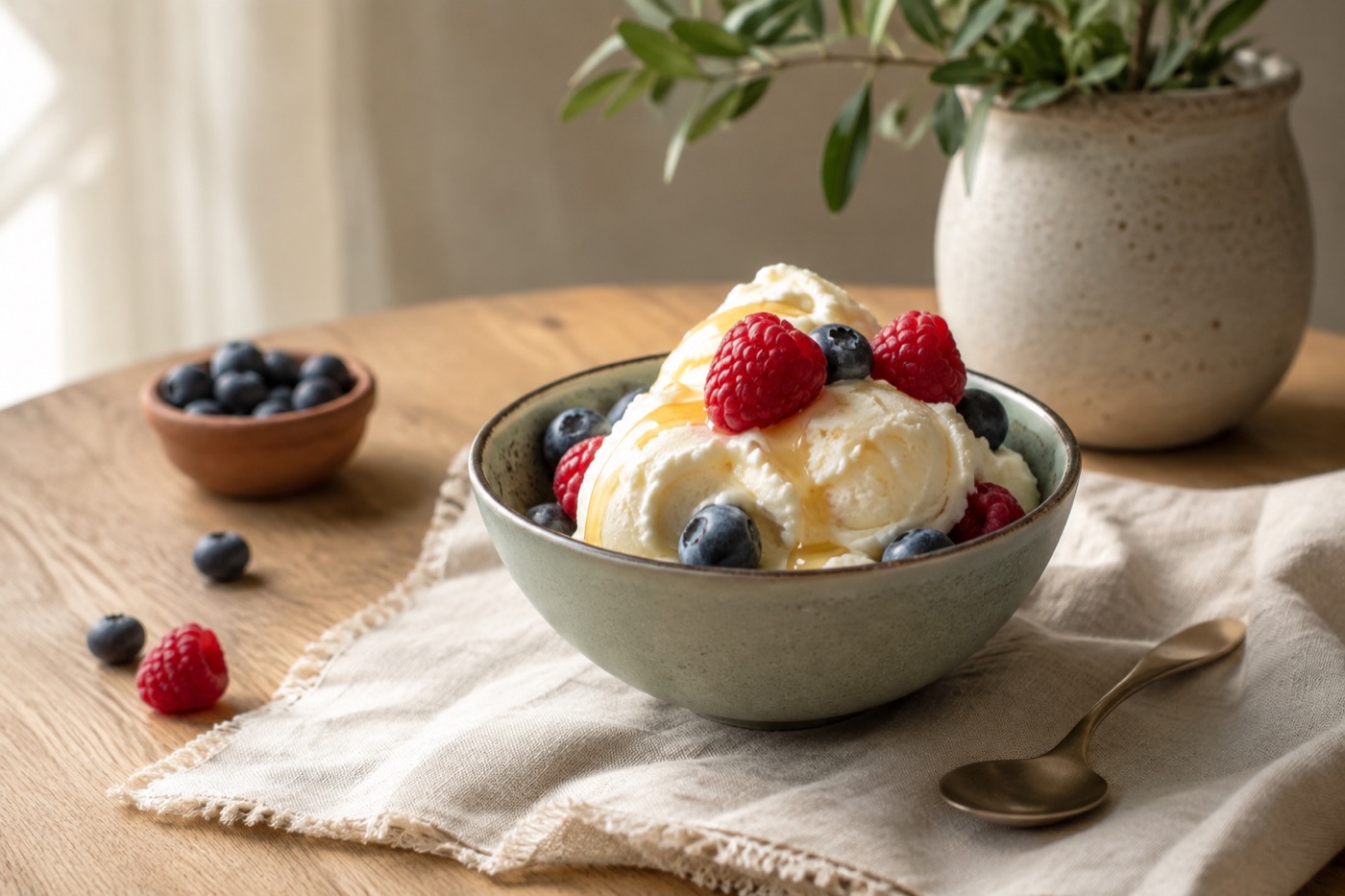
If you’ve seen cottage cheese ice cream everywhere lately, there’s a reason it took off — and it happens to be close to a perfect dessert for anyone on a GLP-1. It turns two cups of cottage cheese into a creamy, scoopable treat with 25 grams of protein per serving, no churning and no cooking. On a medication that shrinks your appetite, a dessert that’s actually mostly protein is a rare win.
Why this works on a GLP-1
The hardest part of eating well on a GLP-1 is hitting your protein target when you’re just not that hungry — and sweet cravings don’t disappear just because your appetite did. Most desserts spend your limited appetite on sugar and fat with almost no protein to show for it. This flips that: the craving gets satisfied and you bank a real chunk of your daily protein at the same time. A few spoonfuls do more for you than a much bigger bowl of regular ice cream.
It also solves the “I can’t face a full dinner” evenings — 25g of protein in a small, cold, easy-to-eat form is often more appealing than a plate of food when nothing sounds good.
The one thing that makes or breaks it
Blend it until it is completely smooth. That’s the whole difference between “creamy ice cream” and “frozen cottage cheese.” A good blender or food processor and 30–60 seconds is all it takes — but don’t rush it.
Make it your own
- Chocolate: add 2 tablespoons unsweetened cocoa.
- Peanut butter: blend in a spoonful of peanut butter (or powdered PB to keep it lighter).
- Berry: blend in a handful of strawberries or the berries you’d use as a topping.
- Higher protein: half a scoop of vanilla protein powder takes it past 30g per serving.
Keep the base recipe in your back pocket — it’s the kind of thing that makes a small appetite work for you instead of against you.
Ingredients
- 2 cups (452g) full-fat cottage cheese
- 3 tbsp honey or maple syrup (or a low-calorie sweetener to taste)
- 2 tsp vanilla extract
- Pinch of salt
- Optional: 1/2 scoop vanilla protein powder, for an extra ~12g protein
- To top: fresh raspberries and blueberries, plus a light honey drizzle
Instructions
- 1
Add the cottage cheese, honey, vanilla, and salt to a blender or food processor (add the protein powder now if using).
- 2
Blend on high until completely smooth and creamy — about 30–60 seconds — stopping to scrape down the sides. Smoothness is the whole trick; any lumps and it reads as frozen cottage cheese instead of ice cream.
- 3
Taste and adjust the sweetness. Pour into a shallow freezer-safe container and smooth the top.
- 4
Freeze for 2–3 hours until scoopable. (Have an ice cream maker? Churn instead for an even softer texture.)
- 5
Let it sit at room temperature for 5–10 minutes to soften, then scoop. Top with berries and a little honey.
Tips
- The single most important step is blending it *completely* smooth — a personal blender or food processor does this best. Under-blend and the texture suffers.
- Full-fat cottage cheese makes it noticeably creamier than low-fat; the fat is what keeps it from freezing rock-hard.
- Want it even higher in protein? Add half a scoop of a good vanilla protein powder to push it past 30g per serving.
- Frozen solid? Don't microwave it — just leave it on the counter 5–10 minutes. It softens fast.
- Flavor swaps: 2 tbsp cocoa for chocolate, a spoon of peanut butter, or blend in strawberries. Same base, endless versions.
Gear that makes this easier
Optional — you likely have most of it. These are affiliate links to category searches on Amazon; as an Amazon Associate we earn from qualifying purchases, at no extra cost to you.
- A personal blender or food processor — gets the cottage cheese silky-smooth — the key to real ice-cream texture.
- A shallow lidded container — freezes it evenly and stores leftovers.
Log this 25g toward your daily target
ProteinDose tracks daily protein on a GLP-1 — one-tap presets, photo and barcode scanning, Apple Health sync.(Our own iOS app — free to download.)